Aircraft class
Hybrid gyroplane

Aurenda designs and manufactures the Avectra 101, a hybrid gyroplane-helicopter engineered from the ground up for the air ambulance mission, safer flight, far lower operating cost, and a lighter footprint on every mission.
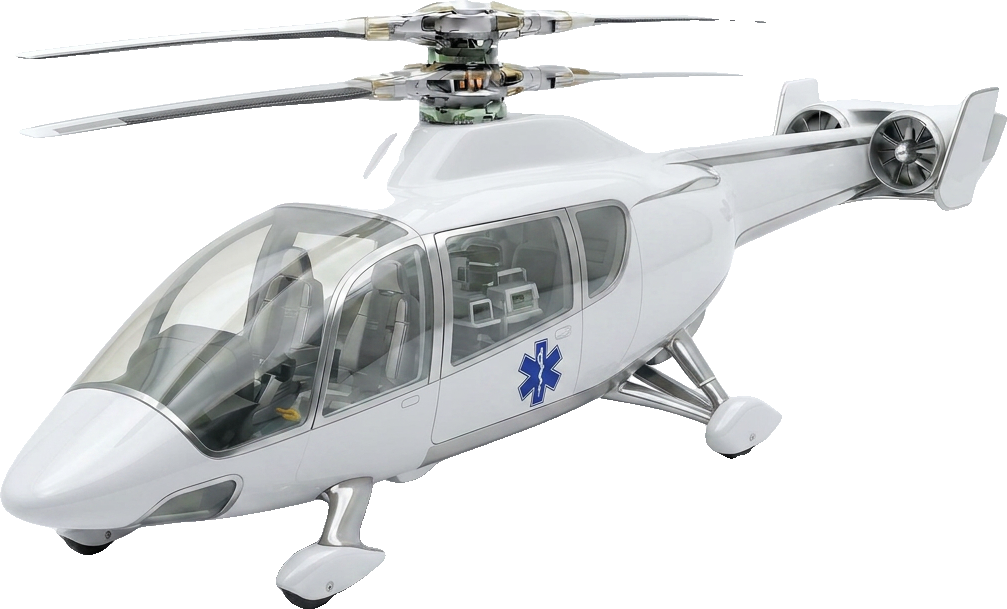
Most emergency medical helicopters are general-purpose aircraft adapted for the role. They are costly to fly, constrained by terrain and weather, and carry a disproportionate safety burden. Aurenda set out to fix that at the source, in the aircraft itself.
Conventional helicopters are exposed to vortex ring state and tail-rotor failure, a leading cause of loss-of-control accidents.
Twin-engine HEMS helicopters are expensive to fuel and maintain, which limits how many missions can be flown.
Terrain, weather and landing-zone requirements restrict where and when a helicopter can reach a patient.
High fuel burn drives high emissions per mission, an increasing concern for public health providers.
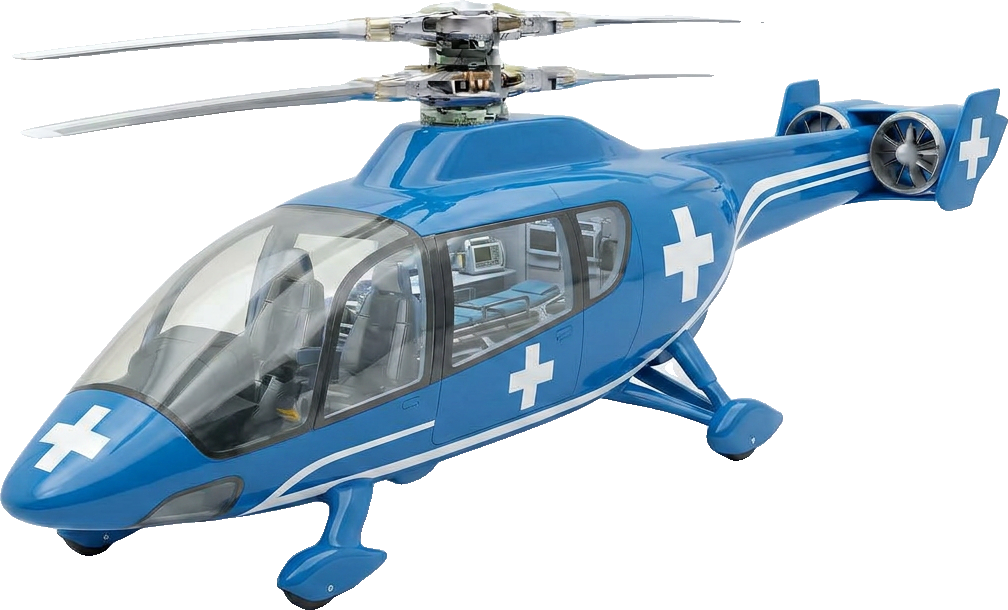
The Avectra 101 is not a modified helicopter. It is a hybrid gyroplane-helicopter, purpose-built so that a single aircraft is safer, cheaper and cleaner at the same time.
No tail rotor. No vortex ring state. An autorotating rotor cannot stall. Safety is engineered in, not marketed on.
Fewer parts, less fuel and simpler maintenance mean far more missions can be flown for the same budget.
A wider environmental envelope, higher winds, harder terrain and tighter sites, so it reaches more patients.
35 to 40% lower fuel burn per mission than a conventional helicopter, with a simpler airframe to maintain.
Every Avectra 101 is built as a mobile critical-care environment. The stretcher-configured cabin is engineered for advanced intervention in flight, and the aircraft is prepared for integrated telemedicine so operators can connect a specialist to the patient from the moment of dispatch.
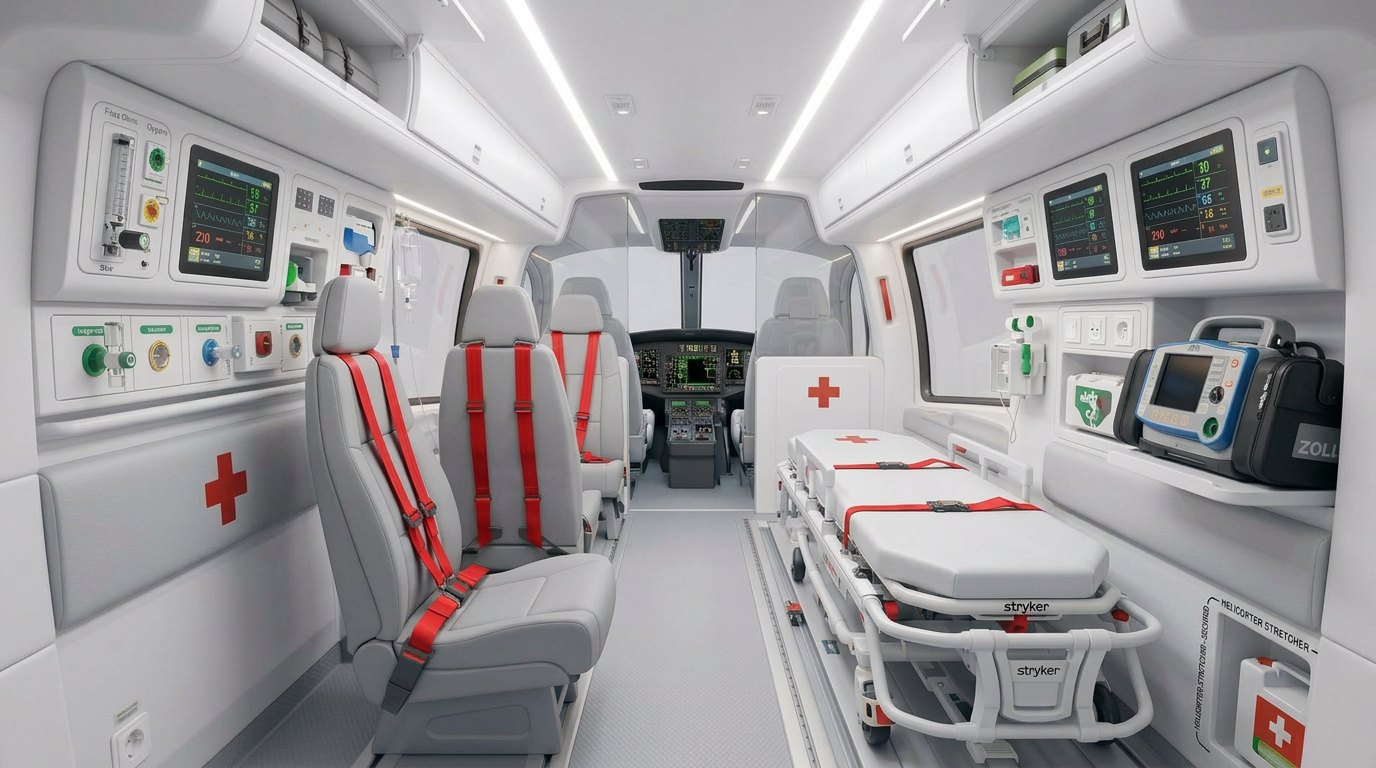
The Avectra 101 is designed for the organisations that deliver emergency medical flight.
Helicopter emergency medical services that need a safer, lower-cost aircraft to fly more missions.
Rapid, high-acuity critical-care transfers between facilities, with a full ICU cabin in the air.
Energy, mining and offshore operators needing dependable medical response where help is far away.
Every figure here is a property of the airframe, not a marketing target.
A quick primer on Aurenda, the Avectra 101 and what a modern air ambulance manufacturer does.
Operators, health systems and agencies, request a specification pack or a technical briefing on the aircraft.