What is the difference between a gyroplane and a helicopter, and why does a hybrid gyroplane-helicopter make a safer, cheaper, more efficient air ambulance aircraft? A clear explainer.
Key takeaways
- A helicopter's rotor is engine-driven; a gyroplane's rotor autorotates from airflow, so it cannot stall.
- A hybrid gyroplane-helicopter adds powered VTOL for take-off and landing, then cruises as a gyroplane.
- This removes the tail rotor and vortex ring state, and turns engine failure into a controlled glide.
- The same design cuts fuel burn by 35 to 40% and lowers operating cost versus a conventional HEMS helicopter.
To understand why a hybrid aircraft can be a better air ambulance than a helicopter, it helps to start with a simple question that trips up even aviation enthusiasts: what is the actual difference between a gyroplane and a helicopter?
Helicopter vs gyroplane: the core difference
Both aircraft fly using a large overhead rotor. The difference is where the rotor gets its energy.
- In a helicopter, the engine drives the rotor directly. That powered rotor generates lift for hovering and vertical flight, but it also introduces complexity: a tail rotor is needed to counteract the torque, and in certain descents the rotor can settle into its own turbulent downwash, a dangerous condition called vortex ring state.
- In a gyroplane (also called an autogyro), the engine drives a separate propeller for forward thrust, while the overhead rotor is not powered in flight. Instead, air flowing up through the rotor as the aircraft moves forward keeps it spinning, a passive phenomenon called autorotation. Because the rotor is always autorotating, it cannot aerodynamically stall.
Gyroplanes are famously stable and safe in cruise, and they have used autorotation as their normal mode of flight for a century. Their one historic limitation: a pure gyroplane cannot take off or land vertically, because its rotor is not powered.
The hybrid solution
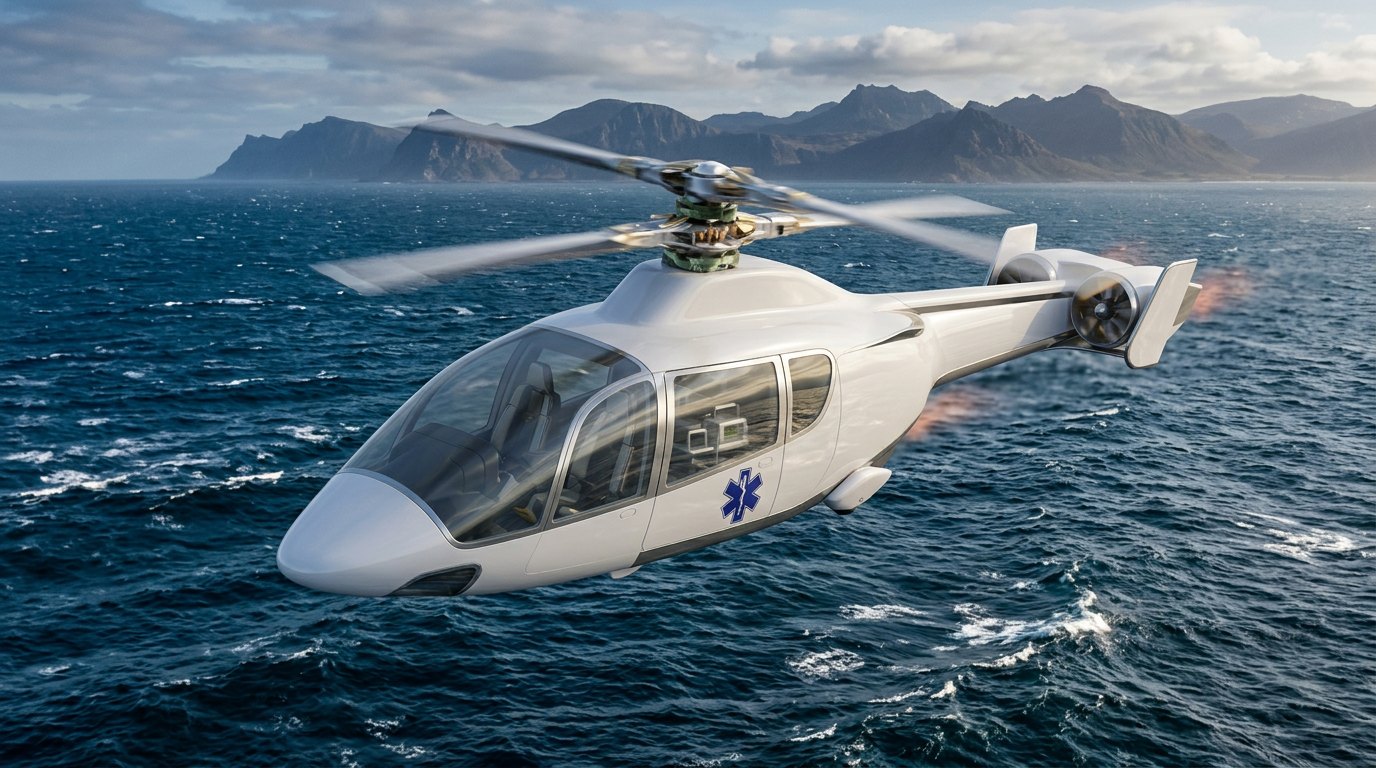
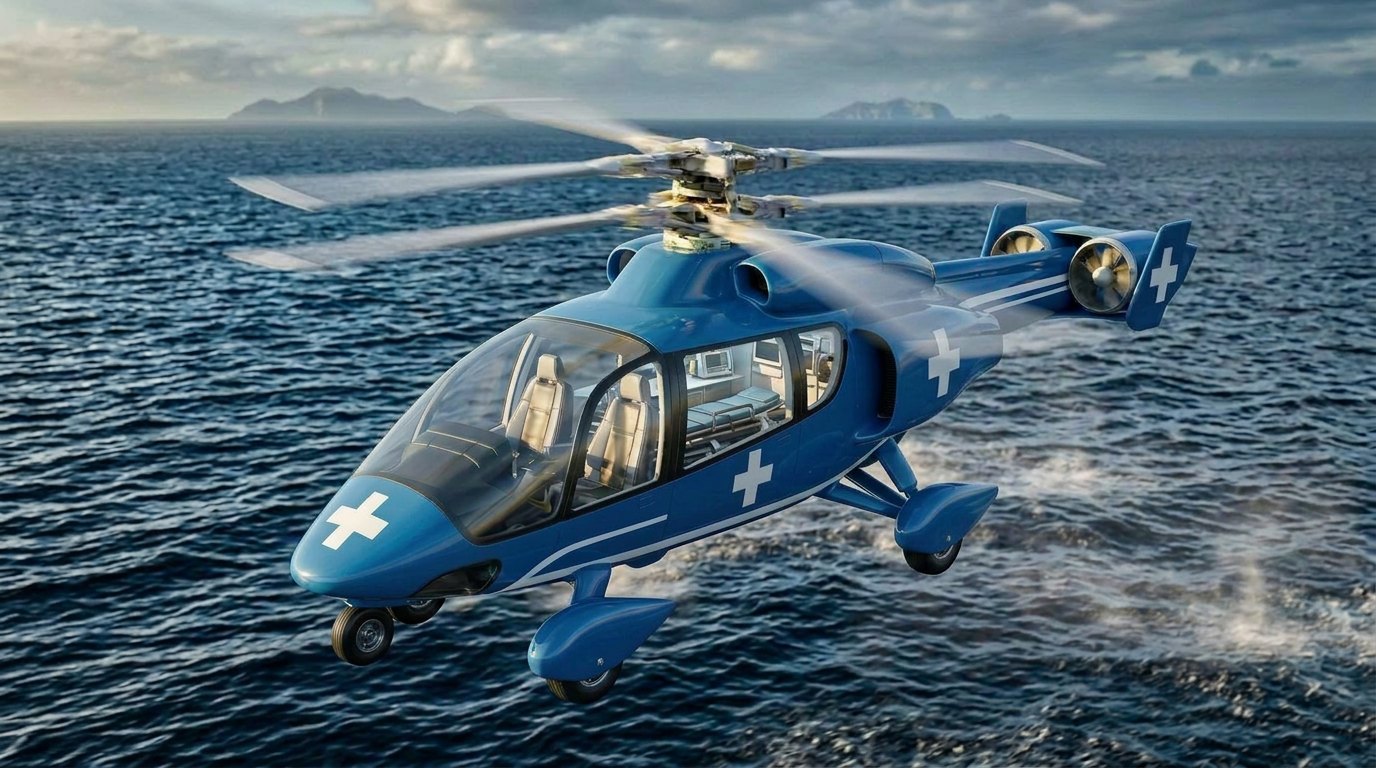
A hybrid gyroplane-helicopter, such as the Avectra 101, resolves that limitation. It uses a powered rotor for take-off and landing, giving it true vertical (VTOL) access to rooftops, roadsides and mountainsides, and then transitions to gyroplane mode for cruise, letting the rotor autorotate freely across the distance to hospital.
In other words, it takes the one thing helicopters do best (vertical flight) and the one thing gyroplanes do best (safe, efficient cruise) and combines them in a single airframe.
Why this matters for an air ambulance
The aeromedical mission is unusually demanding: it requires vertical access to unprepared sites, safe operation in marginal conditions, and low enough cost to fly often. Here is how the hybrid design compares with a conventional HEMS helicopter on each.
Safety
The hybrid has no tail rotor to fail and no exposure to vortex ring state. Its rotor cannot stall, and if the engine fails in cruise the aircraft is already autorotating, so it glides to a controlled landing rather than dropping. Several of the deadliest helicopter accident scenarios are engineered out entirely, which is why the design is described as roughly three times safer.
Cost
Fewer moving parts, a simpler transmission and 35 to 40% lower fuel burn in cruise translate into a dramatically lower operating cost per flight hour. For a service, lower cost per hour means more missions flown for the same budget, more patients reached.
Sustainability
That same fuel efficiency cuts emissions per mission, which matters increasingly for public-sector procurement. You can read more in our piece on sustainable air ambulance aircraft.
Access
A wider environmental envelope, tolerance of higher winds and constrained sites, means the aircraft can operate when a conventional helicopter would be grounded.
Is autorotation really reliable?
It is worth addressing the instinctive worry directly. Autorotation is not a trick or an emergency-only manoeuvre; it is basic physics. As long as air is flowing up through the rotor disc, the rotor keeps turning, no engine required. Helicopter pilots already rely on autorotation as their engine-failure procedure. A hybrid gyroplane simply makes that safe, passive condition the default state of cruise flight rather than a last resort.
A helicopter autorotates only when something has gone wrong. A gyroplane autorotates all the time, that is how it flies.
The bottom line
The gyroplane-versus-helicopter debate is not really about which is better in the abstract, it is about which set of physics best fits the mission. For emergency aeromedical transport, a hybrid that offers helicopter-style vertical access with gyroplane-style cruise safety and efficiency is a genuinely new class of aircraft, and a strong argument for why the next air ambulance should not be a helicopter at all.