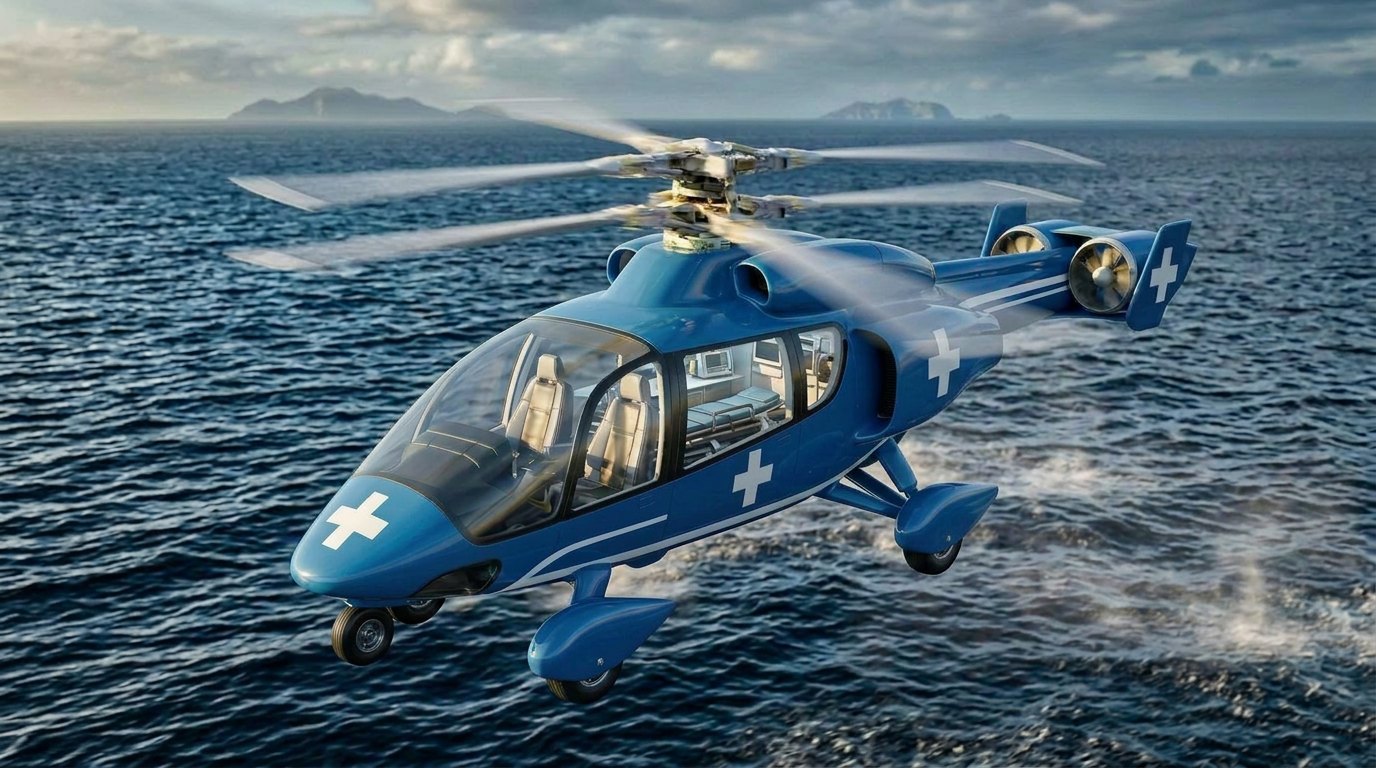
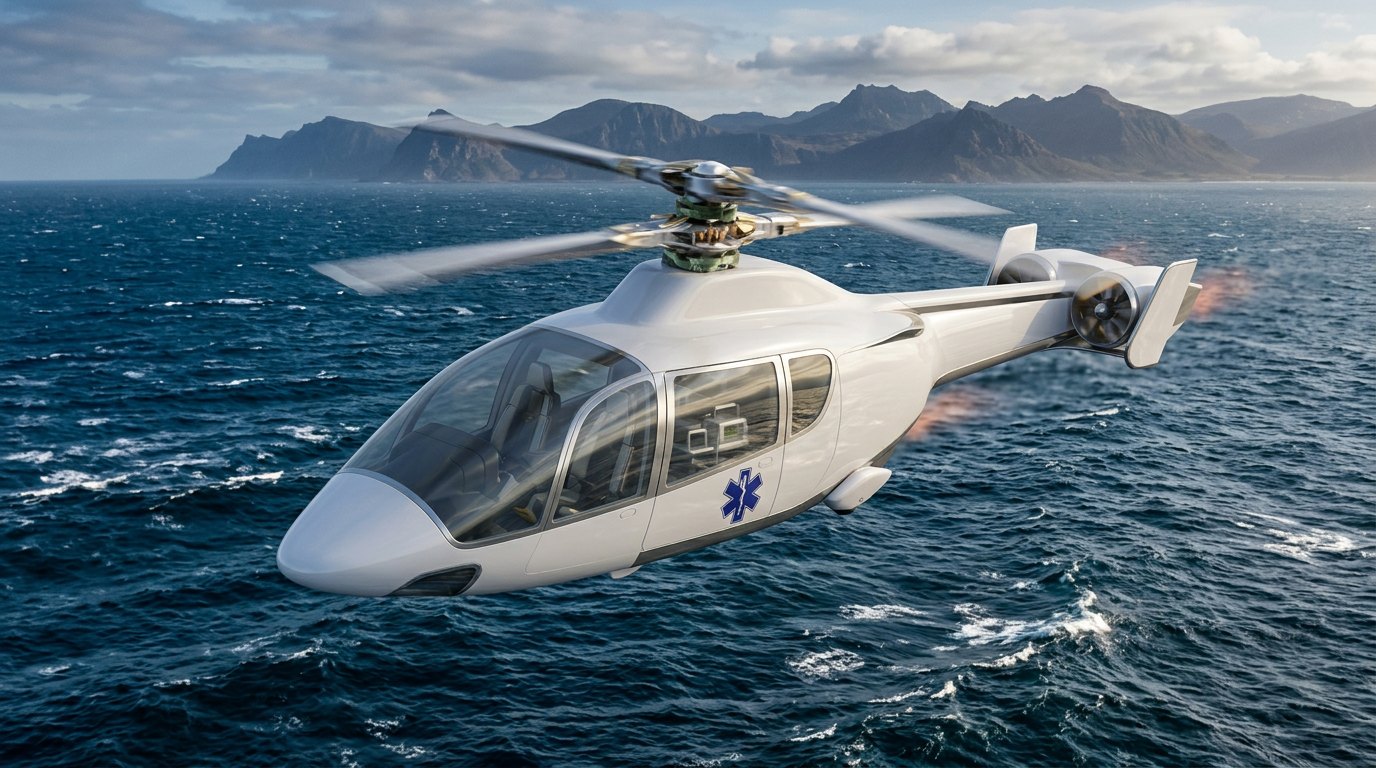
How a new British air ambulance manufacturer is rethinking the aeromedical aircraft from a clean sheet: hybrid design, engineered-in safety, radically lower cost and a critical-care cabin.
Key takeaways
- Most air ambulances still rely on rotorcraft technology from the 1980s, adapted rather than purpose-built.
- A modern air ambulance manufacturer designs the airframe, the critical-care cabin and the connectivity as one system.
- Hybrid gyroplane-helicopter design lets a single aircraft improve safety, cost and sustainability at once.
- Aurenda, a division of Fixius Holdings, is building this integrated approach around the Avectra 101.
For most of the last forty years, the phrase “air ambulance manufacturer” has meant a helicopter maker whose aircraft were designed for something else, corporate transport, offshore work, military utility, and later fitted with a stretcher and a medical kit. The aeromedical mission has, in effect, been a customisation of somebody else's aircraft rather than the reason the aircraft exists.
That is beginning to change. A new generation of manufacturers is treating emergency medical flight as a design brief in its own right, and rethinking the aircraft, the cabin and the onboard technology as a single connected system. This article looks at what that shift involves, why it matters, and what to look for in a modern air ambulance manufacturer.
Why the traditional model reached its limits
Conventional helicopter emergency medical services (HEMS) do extraordinary work, but the aircraft carry three structural problems that no amount of operational excellence can fully solve:
- Safety exposure. Helicopters are vulnerable to vortex ring state and tail-rotor failure, and they frequently operate to unplanned, unprepared landing sites. The result is a disproportionately high accident rate compared with other forms of aviation.
- Cost. Twin-engine HEMS helicopters are expensive to buy, fuel and maintain. High cost per flight hour limits how many missions can be flown and pushes services toward charitable funding.
- Access and flexibility. Terrain, weather and landing-zone requirements restrict where and when a helicopter can fly, often precisely when conditions are worst and the need is greatest.
Because these constraints are baked into the airframe, they cannot be trained or managed away. Solving them means starting from the aircraft.
What a next-generation air ambulance manufacturer actually does
The defining feature of a modern aeromedical manufacturer is integration. Instead of buying an airframe and bolting on a medical interior, the manufacturer designs several things together:
The airframe
The flight platform is engineered around the mission: vertical access to constrained sites, a wide environmental envelope, and safety properties built into the aerodynamics rather than added through procedure. Increasingly this points away from the conventional helicopter and toward hybrid configurations.
The critical-care cabin
A purpose-built cabin treats the aircraft as a flying resuscitation room, stretcher-configured, with space and power for monitoring, ventilation, transfusion and advanced airway management, laid out so a crew can actually work in flight.
The onboard technology
Modern aeromedical care is connected. The manufacturer builds in the wiring and provisioning for a real-time link, so operators can involve a remote specialist from the moment of dispatch, not just after the patient reaches hospital.
The hybrid breakthrough
The most important engineering idea behind this new generation is the hybrid gyroplane-helicopter. An aircraft like the Avectra 101 takes off and lands vertically like a helicopter, but cruises as a gyroplane on a rotor that autorotates freely rather than being driven by the engine.
That single design choice cascades into benefits across the board: it removes the tail rotor and the risk of vortex ring state, it turns an engine failure into a controlled glide, it cuts fuel burn by 35 to 40% in cruise, and it lowers operating cost dramatically because there are fewer parts to maintain. Crucially, these advantages compound, the same features that make the aircraft safer also make it cheaper and cleaner.
The goal is not a better helicopter. It is a category replacement, an aircraft in which safety, cost and sustainability all move in the same direction.
A British example: Aurenda
Aurenda, a division of Fixius Holdings, is one example of this integrated approach. Aurenda is a manufacturer: it develops the Avectra 101 airframe and builds the critical-care cabin and telemedicine-ready systems into the aircraft, then supplies and supports it for the operators who fly emergency medical missions.
The heritage matters. Sitting within a broader aviation group gives an aeromedical manufacturer access to serious engineering capability and a manufacturing pathway, while a clean-sheet mandate lets it design for outcomes rather than for legacy compatibility.
What to look for
If you are assessing a next-generation air ambulance manufacturer, as an operator, a commissioner or an agency, the questions worth asking are simple:
- Is the aircraft purpose-built for the aeromedical mission, or adapted from something else?
- Is safety an engineering property of the airframe, or a matter of procedure?
- Is the cabin designed to bring specialist care to the patient early?
- Do the cost and sustainability numbers stand up per mission, not just on a brochure?
The manufacturers reshaping aeromedical transport are the ones that can answer all four from the design itself. For a deeper look at the aircraft at the centre of this shift, read our explainer on hybrid gyroplanes versus helicopters.