A practical checklist for operators, health systems and agencies selecting an air ambulance or helicopter manufacturer, covering safety, cost, cabin, certification, connectivity and support.
Key takeaways
- Judge safety by design properties, not just an operator's track record.
- Compare true cost per mission, including fuel, maintenance and parts.
- Weigh cabin capability, certification status, connectivity and long-term support.
- The best manufacturers can answer every criterion from the aircraft itself.
Choosing an air ambulance aircraft, or the manufacturer behind it, is a decision an operator or health system lives with for decades. Get it right and you expand safe, affordable care; get it wrong and you inherit cost and risk that no amount of good operating can undo. Here is a practical nine-point checklist for making the call.
1. Is safety a property of the design?
Ask whether the aircraft's safety comes from engineering or from procedure. A design that removes the tail rotor, eliminates vortex ring state and glides on engine failure is safer by construction, not dependent on perfect conditions or flawless technique. Look for structural safety, then verify the operator's record on top.
2. What is the true cost per mission?
Headline purchase price is the least important number. What matters is the fully-loaded cost per flight hour and per mission: fuel burn, maintenance intervals, parts consumption and crew. A lower cost per mission is not just a saving, it is more missions flown for the same budget, and therefore more patients reached.
3. Is the cabin a real clinical environment?
A stretcher does not make a hospital. Assess whether the cabin is engineered for advanced care: secure equipment mounting, oxygen and power, room to intubate and perform CPR, and a layout a crew can actually work in during flight. A purpose-built cabin beats a retrofit every time.
4. What is the certification status?
Confirm the type-certification position with the relevant regulator (CAA, EASA or a national equivalent) for the markets you operate in. Certification is the independent proof that the design is safe. Understand what is certified today and what is still on the pathway.
5. Is the aircraft built for connectivity?
Modern aeromedical care is connected. A manufacturer that builds in a resilient, telemedicine-ready cabin, so operators can bring a specialist to the mission from dispatch, enables better outcomes than one that treats the aircraft purely as transport.
6. How wide is the operating envelope?
An aircraft that can only fly in benign conditions leaves patients stranded when weather or terrain turns difficult. Ask about wind limits, site constraints and the ability to reach genuinely challenging locations, the missions where an air ambulance earns its place.
7. What is the sustainability profile?
Emissions per mission increasingly feature in public-sector procurement. A platform with markedly lower fuel burn helps meet environmental commitments while expanding care. See our note on sustainable aircraft.
8. Is there a credible manufacturing and support system?
An aircraft is a decades-long relationship. Evaluate the manufacturer's continued-airworthiness support: spare parts availability, maintenance network, training, and the financial and engineering stability to stand behind the fleet for its whole life.
9. Purpose-built or adapted?
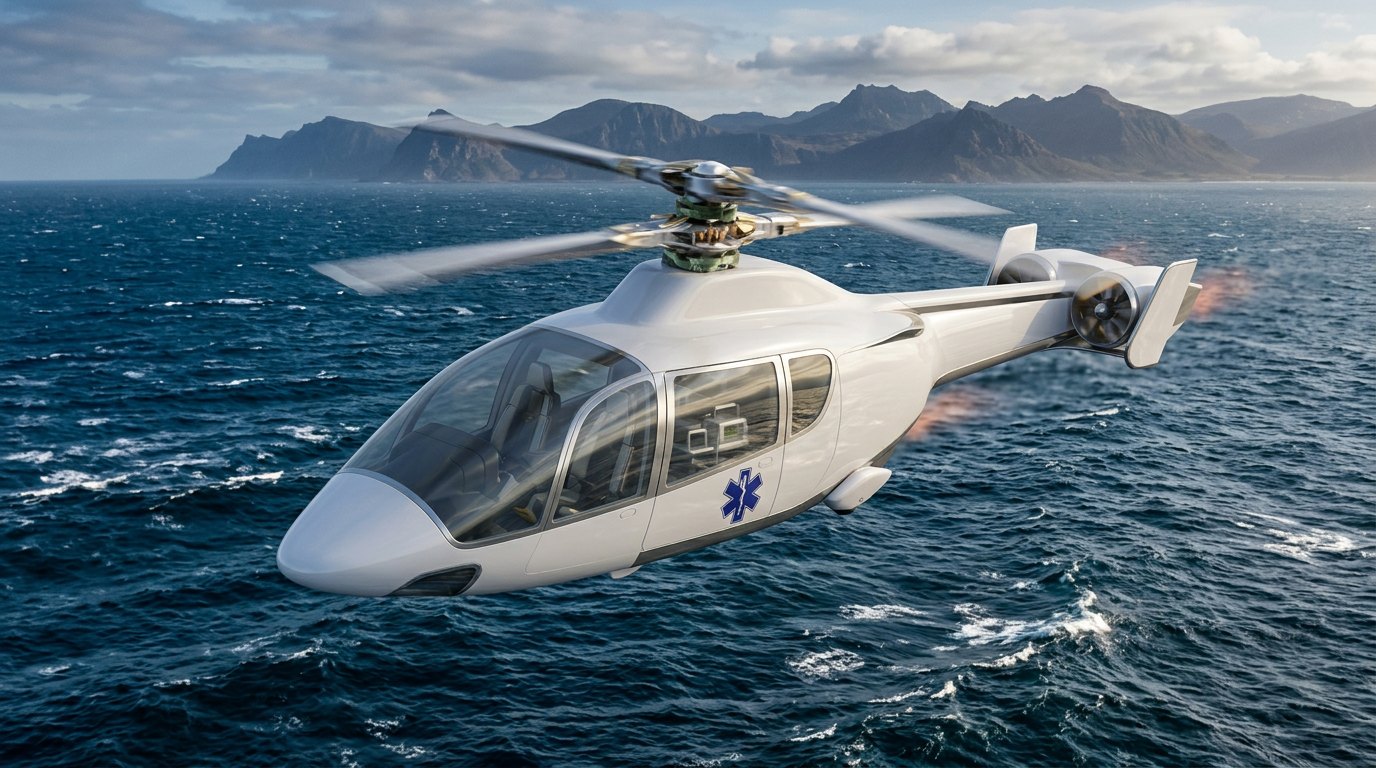
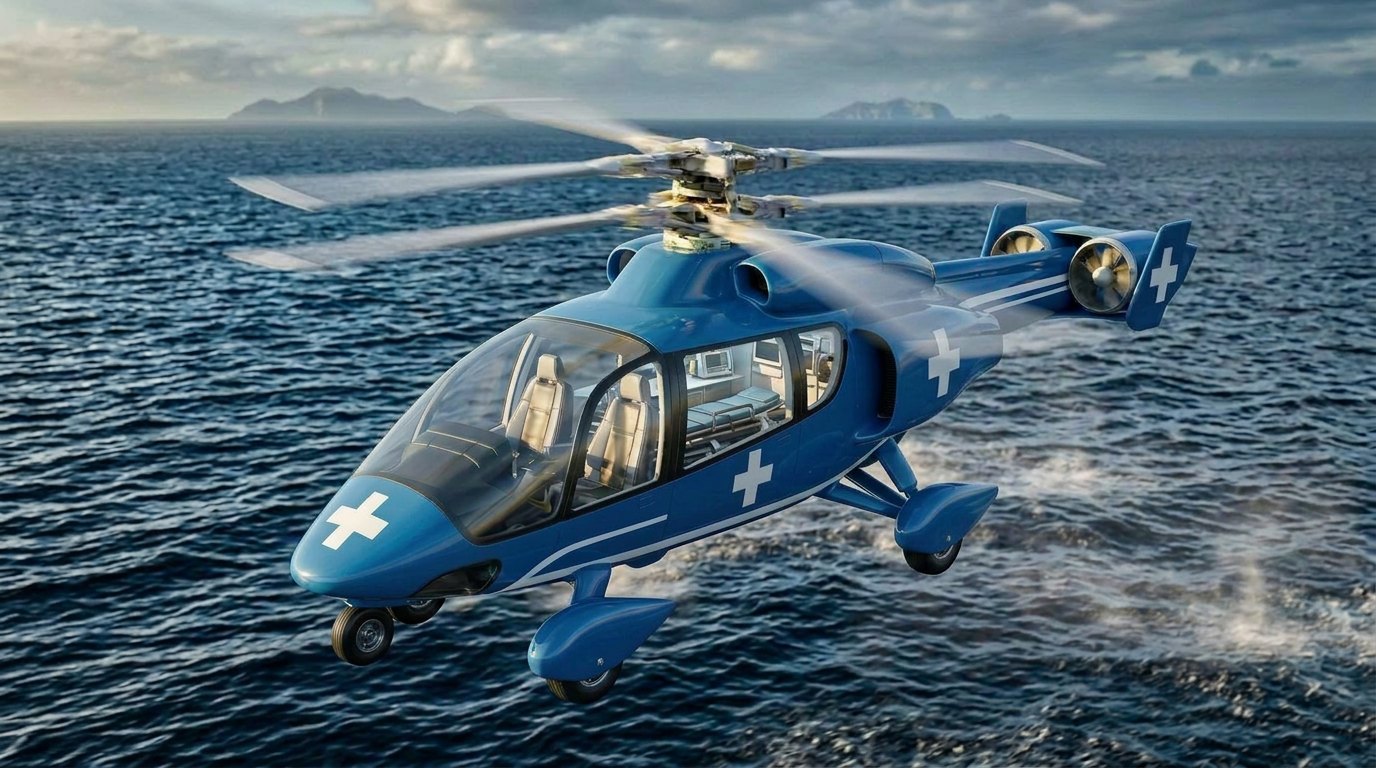
Finally, the question that colours all the others: was the aircraft designed for the aeromedical mission, or adapted from something else? Purpose-built platforms, like a hybrid gyroplane-helicopter conceived specifically for this role, tend to answer criteria one through eight better, because they were built to.
The strongest manufacturers can answer every one of these from the design itself, not from marketing.
Putting the checklist to work
No single criterion should decide a procurement, but together they separate a genuine next-generation air ambulance from a repackaged legacy one. If you would like to see how one purpose-built platform measures against this list, explore the Avectra 101 or talk to our team for a detailed briefing.